copyright

A world without Intellectual Property – a rather sad place

Is it possible, that something non-material is in fact of the most value? Well, it is far too often, intangibles, such as rights or entitlements, are either not considered, because they can’t be seen or touched or underestimated. What comes to mind is the insurance cover. One often only realises its value in times of emergency and crisis.

Intellectual Property (IP), is the property of the mind or proprietary knowledge. Basically, it is the productive new ideas created. Intellectual Property comprises inventions in the form of patents, badges of origin in the form of trade marks, the overall appearance of industrial products, covered by registered designs, plant breeders rights, circuit layouts on microchips, or simply trade secrets.

IP is a remarkable asset, as it protects from attacks of business competitors, enables one to actively preventing any third party from exploiting one’s idea commercially, and creates an ongoing revenue stream from license fees, payable in exchange for the consent to commercialise an idea.

It is suggested from time to time that ideas should not be monopolised and no one should be able to monopolise words, slogans, logos, inventions the like. But would this really lead to growth or at least sustainable progress for all to enjoy? Surely, it sounds like a great idea, if we all share ideas freely. But then again, humans are competitive by nature competition has always been the driver of innovation.

On the contrary socialist society ideas or even the idea of communism, based on deliberate equal sharing of wealth had not been far too successful in recent times.

But let’s put it to the test and think of a society, where Intellectual Property rights do not exist and where in fact every innovation created immediately forms public domain. Wouldn’t it be nice, if we can all just use other people’s ideas and use them for ourselves and our own good and that of our family? The answer is evident the moment one is putting oneself in the creator’s shoes. Without monopoly rights, able to be owned by a creator, there is little reward and thus incentive to the creator. In other words: Without trade marks, copyright, design rights, or patents, there is no monetary motivation to create new things. The desire to strive is killed, causing innovation to slow to pause.

Where no innovation is possible, because no one feels the desire to innovate for the lack of an incentive, it is hard to imagine, that operating systems of computers would continue to exist, pharmaceuticals, all based on years of research and development, that is to be funded, as the researchers and developers need to make a living, would disappear, because all investment needed to produce a vaccine or drug would be ultimately lost and could not be recuperated.

A world without science and technology

Apart from not having any effective medication to fight the world’s most dangerous diseases, such as the current COVID-19 disease, similarly, technological innovation in the most advanced fields would stagnate due to a lack of monetary incentive in a world that lacked the protections afforded by copyrights, patents and trade marks.

Where there is no research and development, there are no progress and no advances in science and technology, as the developers lose, when the market is flooded with cheap copies. Product quality would be gone immediately, as companies would from then on focus on mass production to somehow achieve a profit.

Art and literature would barely exist in this world

All of a sudden, any art and literature would disappear as soon as copyright would be non-existent. Without a way to monetise creative work or even art to create an income for themselves, many artists would turn their backs on building, drawing, painting, and composing and would rather be looking for a day job and bring bread to the table.

After all, the ability to make a living fully depends on the ability to create an income from one’s work. With no IP even existing, books, paintings, music, and any other form of art would also slowly vanish. And even though a few artists and authors would be all too enthusiastic and would continue to craft, build, create, compose, and text, publishers would all go bankrupt and with them disappearing, the income stream of all these remaining creative enthusiasts would be gone as well.

Business, in general, would come to a standstill

Copyrights, patents, and trade marks provide businesses, regardless of size, with tools to fight infringement by competing businesses. Without IP existing, the already ultra-competitive business world would become even more ruthless. Businesses would have to move incredibly fast to leverage the advantage gained by inventing or innovating something new. If you don’t capitalize on your edge fast enough, competition can and will simply copy and overtake you, by saving on investments in innovation.

When all commodities and natural resources are gone we would have to flee the planet but would not have created a spaceship that could take us to a new world.

So, although patents, copyrights, and other key aspects of IP law may seem abstract and even unnecessary to those who don’t fully understand their purpose, they inevitable elements of our society. The guarantee of certain monopolies through the protection of IP rights enables a healthy market competition that is the driver for creative, scientific, and business innovations while protecting those who innovate. It follows naturally that Intellectual Property must remain existent. This is well illustrated by the now famous quote by Mark Getty, the chairman of Getty Images: “Intellectual Property is the oil of the 21st century.”

Let’s make sure, we innovate enough to be able to find a new place to live when this Earth comes to an end.

If you would like to find out more about your company’s intangible assets or require a valuation of an existing Intellectual Property Portfolio, contact us:

PHONE: (02) 8277 4114

EMAIL: office@one-ip.com.au
IS IPHONE 12 WORTH THE KIDNEY JOKES?

• Written by Hajra Abdul Ghafoor 

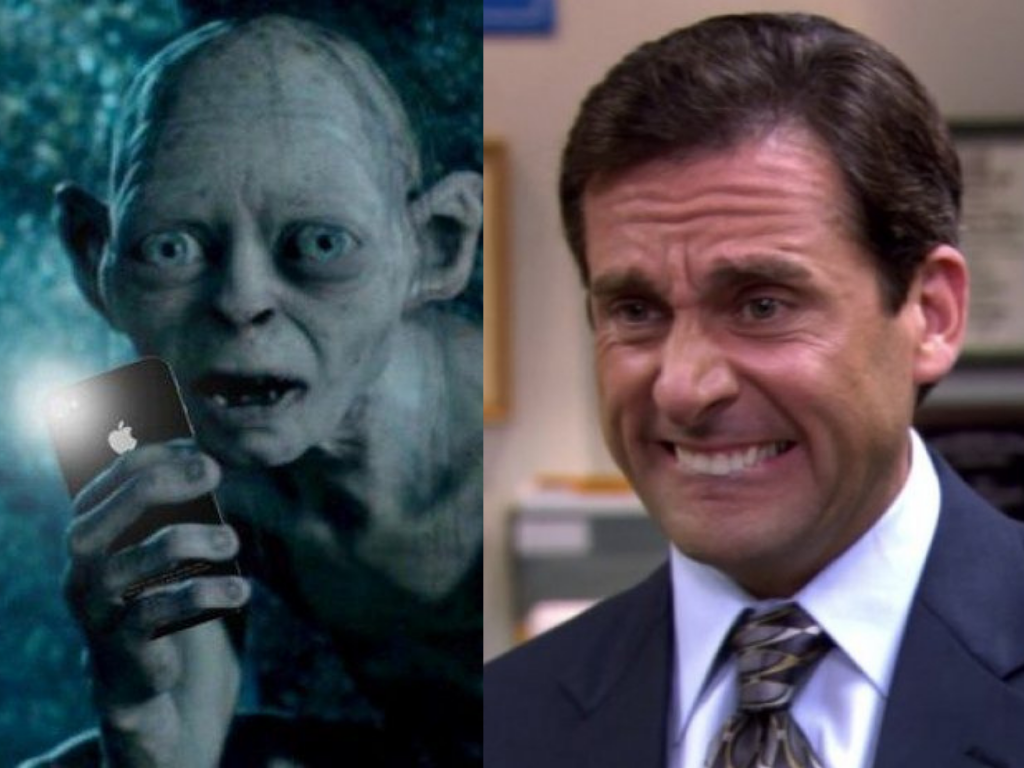
Everyone is excited because it’s the new iPhone time, but the real question is, is it worth the hype?

Well, it has been a long time since Apple has made this aggressive of a pitch, and I am going to support that claim by firstly inspecting the features and then comparing them with the previous versions!

So, the core question is, what’s new this year? Well, a lot!!

New design, MagSafe, OLED screen, processor, camera capabilities and of course 5G!

Okay, first things first:

COST COMPARISON: 

It costs a bit more this year, (hence the kidney puns!), it starts from $699 but according to the official site, it was $829 for the base 64-gig model and extra 50 bucks for the 128-gig model.

Discounts?

There is a wide range of discounts from US carriers from special instalment plans to $30 discounts right of the bat.

DESIGN: 

Size-wise, it is smaller than iPhone 11 and it has flat sides and a perfectly flat screen and not the rounded sides that previous versions of iPhone had since the iPhone 6! That actually gives it a modern look and despite those hard corners, it’s quite easy to use.

But if you want any smaller phone, you will have to wait for the iPhone 12 Mini and if you want a bigger phone, then spring for the iPhone 12 Pro Max!

(iPhone 12 Pro Max and iPhone 12 Mini will be available for pre-order on November 6 and the shipping will begin on November 13!)

Colours: There is addition of new colours as well! It comes in blue, white, black, red and light green. 

The rails on the side are aluminium with a matte finish and the back is still regular glass with a glossy finish.

The front is something Apple calls, “Ceramic Shield”, where they put a ceramic crystalline structure in the material to make it more drop resistant and according to them it is four times more drop resistant than iPhone 11!

As for scratch resistance, there is no change from before.

But if you are really looking for something to not like in the design, there might be two things to complain about:

1. There are a bunch of antenna lines and cut-outs on the rail to make it look a bit asymmetrical.

2. There is still a big old notch for the Face ID camera. (People with trypophobia might get where I am coming from!)

But again, neither one of those are a big deal to most people!

Face ID still works great as long as you are not wearing a mask, it would have been better with a fingerprint sensor though (just a minor suggestion!).

SCREEN:

A new thing in the iPhone 12 is the screen. Apple has switched to OLED, which most people think is better, black is blacker and Apple’s dedication to keeping colors accurate is of course profound as always. OLED is what allowed Apple to reduce the size of the bezels and make the phone smaller overall.

Another nice thing about the screen is more pixels. It is a proper 1080p panel now! In HDR, the regular 12 can still hit 1200 nits of peak brightness

MAGSAFE CHARGER:

Magnetic: The new MagSafe wireless is a $39 charging puck and it simply charges as magnet attached to the back of the phone. It means that you can use the phone while it is wirelessly charging, and the magnets are strong enough to hold the phone up.

Charging Power: A MagSafe charger for iPhone 12 can charge up to 15 watts instead of capping out at 7.5 watts like other wireless chargers.

Note: You are going to need a strong USB-C adaptor to charge it as it does not come with the box!

Speed: It is not faster than the cable charger, but overall wireless charging times are definitely faster than other wireless chargers.

Testing: Almost 40% charge in an hour of testing though overall battery life is quite good.

Wallet: There is also a shielded wallet that is supposed to keep your cards from demagnetizing, though it can only fit up to 2-3 cards.

5G:

Well, we have seen the hype associated with 5G everywhere but still in the developing countries and even in Australia and America, mobile networks are providing limited access to certain places and so there is not much of a difference or it can be even slower in specific areas, though we are hoping for a better future to 5G.

But to keep battery life good and checking network strength, iPhone 12 has a default mode called Smart Data Mode which drops to the 4G or respective LTE speed once detected, unless the phone decided you really need 5G for something that you are doing!

But if that irritates you for some reason, you can always turn it off and use 5G all the time if it is available to you.

Limitations: If you have both physical and an eSIM active on the phone at the same time, you cannot use 5G because of the limitations of the dual-sim, dual-standby in that spec, but you can turn one of them off and get 5G back.

Bottom Line: Just, don’t buy the phone solely because it has 5G!

CAMERA:

Software: Some new updates have been made to the camera this year and Apple has updated and improved its software for processing photos.

Aperture: The main camera has now a slightly faster aperture. It is 1.6 instead of 1.8 that lets more light in which helps with low light photos.

It is still the same wide-angle camera, the same ultra-wide camera and the single selfie camera.

The new software and the A14 bionic processor let the phone extend the night mode to every single camera lens and let it do portrait mode in low light and it also applies better semantic processing to things that phone can recognize like faces or the sky etc. So, compared to iPhone 11, it has less noise and sometimes better colour in photos.

Though Apple is trying to work on the quality of its ultra-wide camera, but it is a step down from the main camera.

Though, these are just some of the edge cases but mostly iPhone 12 camera quality won, and it is the major improvement that we think leads!

Video Quality: Apple is also making big claims about its video quality with HDR and saying that this is a Dolby Vision camera, and of course, it is also the newer version of Dolby Vision and it works great on the iPhone but it will seem weird on other Apple devices like the Apple TV.

 PROCESSOR: 

There is a new A14 bionic processor in iPhone 12 which is very fast and of course way better than android but also, the main impact it has this year, is on the photo improvements.

Overall, this iPhone is having several features, but when we single out each of them, then they come with their own limitations. So, this phone can act as a basis for further improvements but if you already have an iPhone, then It is not a must-have but just a minor upgrade!

Hope this article helped you decide your next steps. If you have any queries, we at ONE IP INTERNATIONAL are always there for your help. Contact our team for any kind of assistance. We would be glad to be of any service!

REFERENCES:

https://www.apple.com/au/

HOW EFFECTIVE IS COPYRIGHT LAW ON MEMES IN AUSTRALIA? A STRAIGHTFORWARD ANALOGY

  • Written by Hajra Abdul Ghafoor


All this confusion to share or not to share when popularity of social media platforms makes it much easier for people to upload, stream and distribute what they like and sharing is only a click away.

In such times, we cannot rely on the answer given by some lawyers, “Well, it depends”. Well, anybody can answer that vaguely!

So, let us just make this simple, not over complicate the matter and dive exactly into what is allowed and what is not.


SO, WHAT DOES AUSTRALIAN LAW SAY?

According to Australian Copyright Council:

BASIC PERMISSIONS:

Permission or No Permission?

  • Need permission to use copyright-protected material unless there is an exception.
  • No permission if you can rely on fair dealing exception.
  • No permission if copyright has expired.


So, does it end here? Of course not! Legal framework provides a protective zone for all issues with freedom but flexible confinement.

AMENDED WORK PERMISSIONS AND FAIR USE – YOUR STATUTORY RIGHT:

But what is fair use?

When you transform some work into something new, that can be deemed as fair use.

Why? Because it is giving a new meaning to that Drake or Willy Wonka photo.

So, what are the ways of transforming?

Some common ways of creativity in different informatics are:

Audio: vocal line of one song added to instrumental track of another song to create new music, such as remixes or mashups.

Video: different scenes from different movies cut together to make a new scene with a different meaning.

Text: A zombie story combined with a text of a famous novel.

Images: Adding your own text as a part of someone else’s photograph as a part of a “meme’.


Keep in mind: Copyright plays a role because you may need the copyright owner’s permission if you are incorporating any copyright protected material into your new creations.


But wait, what does Terms of Use at the end of meme apps like mematic mean when it says “Use it only for personal use”?

Well, in apps like mematic or websites, there is a takedown or copyright infringement policy too, so, even if somebody does not like the meme or the caption on your photo (the person might find it offending or perceive as hate speech), he/she can file a report on copyright infringement or may issue a takedown notice.

TOO LAZY TO ADD THE CAPTION OR TRANSFORM AN IMAGE?

Well, here is the easiest solution!

  • Where to get image template for fair use?

– Google Advanced Image Search for fair use images , here.

– Using sites like Pexels, Pixabay and Unsplash.

2) Where can I edit the image or add captions free?

– You can use editing softwares like GIMP, Photoscape X and Fotor for personal amendments and avoiding copyright infringement.

– If you want to add caption on the images, you can use Canva (free), Sticker Maker (free) and Font Candy (cheap).

In any case, if you are going through any issues, it is better to seek advice from a legal representative.

For more details on copyrights, personal branding and detailed consultation on Intellectual Property, contact our team at ONE IP INTERNATIONAL PTY LTD.

References:

https://www.copyright.org.au/ACC_Prod/ACC/Information_Sheets/Mashups__Memes__Remixes___Copyright.aspx

ONE IP Cheat Sheet – What is Copyright?

Copyright is a complex element of Australian and international law, with many nuances that can all too easily be misinterpreted. Copyright law is also different from country to country, with large differences in the way the United States upholds copyright in comparison to the creation and ownership of copyright within Australia. Understanding these differences is crucial when it comes to exploiting and controlling your work across both of these territories.

What is Copyright?

So What is Copyright?

The simplest definition of copyright is that it is ‘a bunch of rights in certain creative works such as text, artistic works, music, computer programs, sound recordings and films’ (Smartcopying.edu.au). Copyright owners have the right to prevent others from reproducing or using their work without their permission, and are able to exploit their copyright rights through the sale of the rights to someone else as a controllable and valuable asset.

One area that can cause confusion for people is that copyright does not protect ideas, concepts, styles or techniques. This can be particularly nuanced for those in the creative industries who take ideas and develop them into other properties, such as film, theatre or novels. Whilst the script, play or manuscript itself can be protected, the base idea for the project is not covered under copyright.

As well, copyright is a different right to the property right in an object. Whilst you can be the owner of a book in its property form (physical or digital), you will not also own the associated copyright with that book unless it’s been assigned to you.

What are Australian Copyright Laws?

In Australia, we enjoy automatic copyright protection, meaning there’s no requirement for copyright to be registered for it to be enforceable. Work is protected the moment it takes a material form, which can be as simple as writing it down, taking photos, creating sketches or recording it. We recommend you keep drafts and copies of your work from its original date of conception in order to prove your copyright ownership and rights enforceability. You can also clearly display copyright on your work by using the copyright notice symbol, your name and the year you made it.

Copyright lasts for the duration of your lifetime before extending 70 years past the date of your death, in which time nobody has the right to use or change your work without your permission (the use of your original work without permission is called copyright infringement and is an illegal act).

In the United States, copyright must be registered in order for it to be enforceable.

Copyright is an important element of your intellectual property. If you’re unsure as to your copyright rights and whether or not you have the protection you require, our team at ONE IP INTERNATIONAL can work with you to evaluate your IP protection needs before managing the process on your behalf. As your IP is an invaluable part of your business and personal assets, knowing it’s managed and protected is an important key to peace of mind in growing and nurturing your business.

How is copyright ownership decided when a robot creates an artistic work?

As technology has continued to advance, it’s brought with it a host of legal issues that old legislation could not have foreseen coming when certain intellectual property rules were set in place. Previously, defining copyright was simple: the creator of the artistic work owned it automatically. However, with recent technological developments, we’ve now reached a point where robots have the capabilities of creating artistic works, which leads to the question: who owns the artistic work? Is it the person operating the robot, the person who created the robot, or the robot itself?

Copyright Frameworks

Copyright regulatory frameworks that delve into this space differ from jurisdiction to jurisdiction. The US and Germany share the same viewpoint, with previous rulings upholding a belief that only artistic works created by humans can be protected by copyright. However, the Copyright Act in the UK has taken a different approach, granting copyright of a computer-generated artistic work to ‘the person by whom the arrangements necessary for the creation of the work are undertaken’.

In Australia, section 35(C) of the Copyright Act 1968 (‘the Act’) defines the author of the artistic work as the owner of the copyright. Although ‘author’ is not defined within the Act, the judgement in Acohs Pty Ltd v Ucorp Pty Ltd (2012) FCAFC 16 ruled that artistic works which are partially generated by computing programs are not protected under copyright law.

Australia’s Copyright Law

This current stance from those tasked with protecting Australian copyright decisions may face fresh challenges and issues as technology continues to advance, with a key example of this grey area arising in the form of the newly released ‘Google Clip’ camera. Google Clip uses AI and machine learning to detect moments, automatically taking photos upon detection. Under the current interpretation of the Australian Copyright Act 1968 and Acohs, if Google Clip cameras were in use in Australia, the copyright of the photos taken by Google Clip wouldnn’t belong to the owner of the Google Clip, to the robot, or to the creator of Google Clip themselves – as current laws stand, nobody would own the copyright.

There’s no question about the direction technology is heading, and Australia’s current approach to copyright ownership when artistic work is created by a robot or by an AI system will no doubt reach a boiling point when a key case will force the issue into the public’s – and court’s – consideration. As we move towards a society that’s more integrated with highly intelligent AIs, robot-generated artwork will become more and more common. Sooner or later, a new approach will need to be considered, in order to grant copyright protection to artistic works created by AI and machine learning.

Please note this article is not intended to provide any form of legal advice. The material of this article is of a general nature only and is based on Australian law as of the date of publication. If you require assistance with matters relating to copyright ownership, protection or intellectual property management, please contact us at ONE IP INTERNATIONAL so we can assist you.